Day three in Germany was the start of a side quest… a weekend in Berlin! We got up early, skipping Brekky at home and made our way via bus and S Bahn (overground train) to central station to get on a regional fast train to head to Berlin. D and I made use of the various bakery options at the train station (they are many and full of fabulous things) to get some food to take on the train for our Brekky.
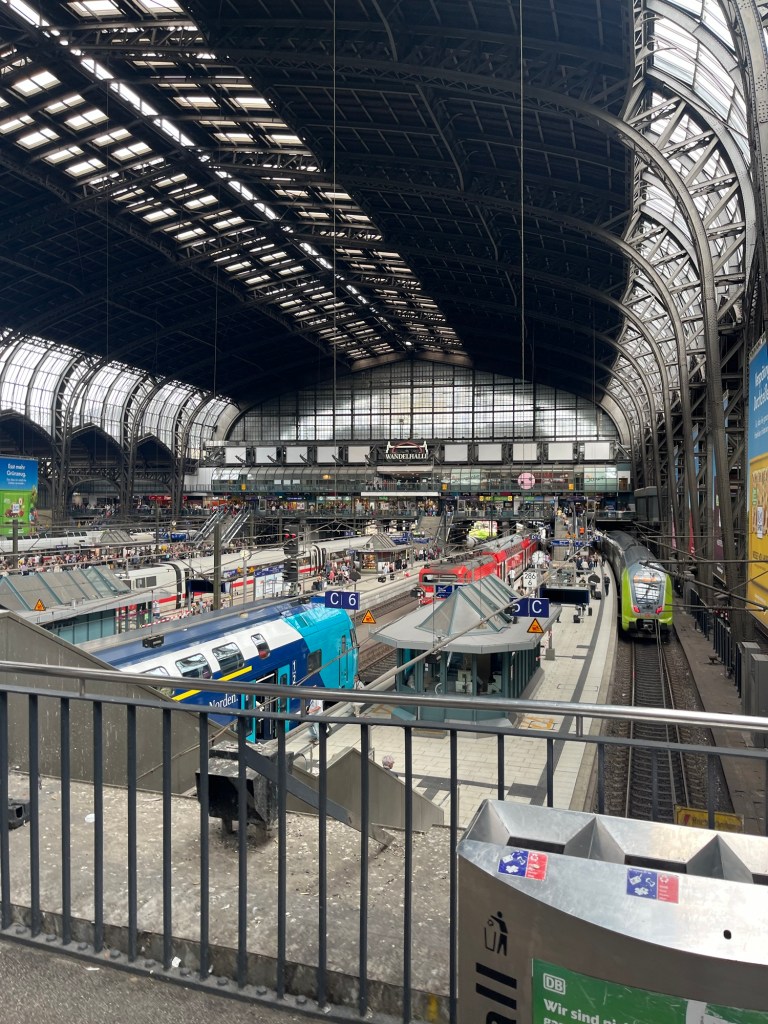
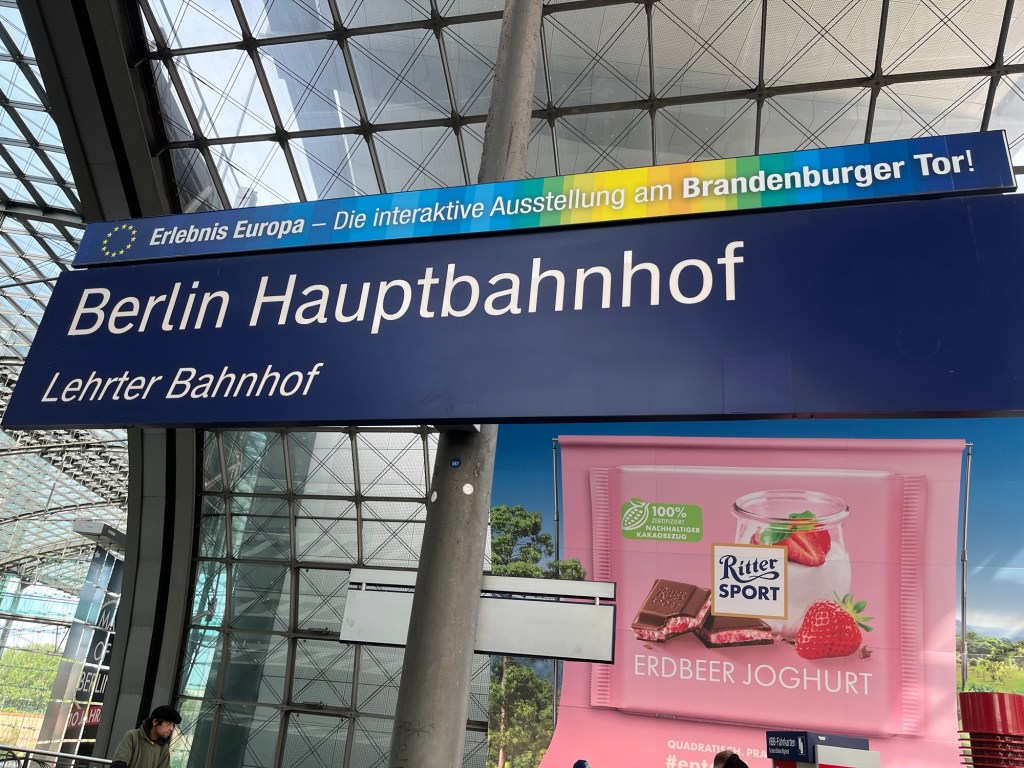
The train was punctual – as all things in Germany are, and at 7.38am we were off. The train made a couple of stops in various towns on the way to Berlin, but it was a very pleasant, comfortable and hassle free way to travel. We did have some kerfuffeling at central station when we got there, but that was more to do with trying to organise city wide travel cards and questions around the hop on hop off bus from my uncle than anything else.

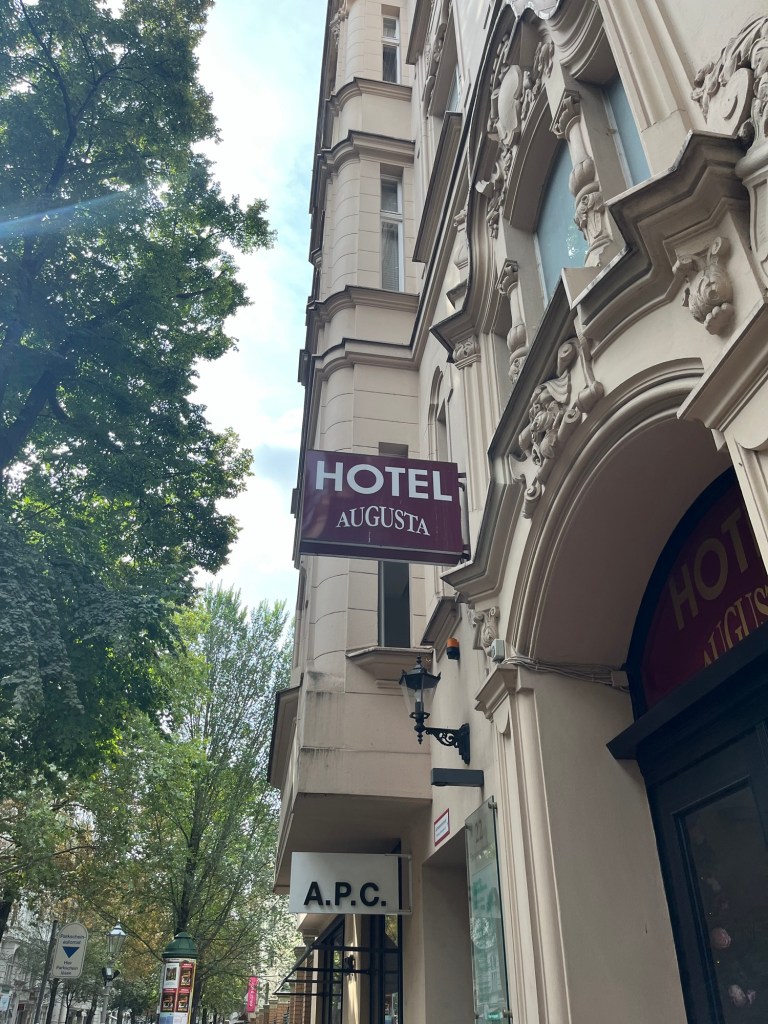
Once that was all sorted, we made our way to our hotel, which is situated just off the main, posh shopping street – the place you want to be seen to be seen! It’s a quaint little place, and certainly very comfortable for our two night stay. As soon as we had freshened up and dumped our luggage, off we went!
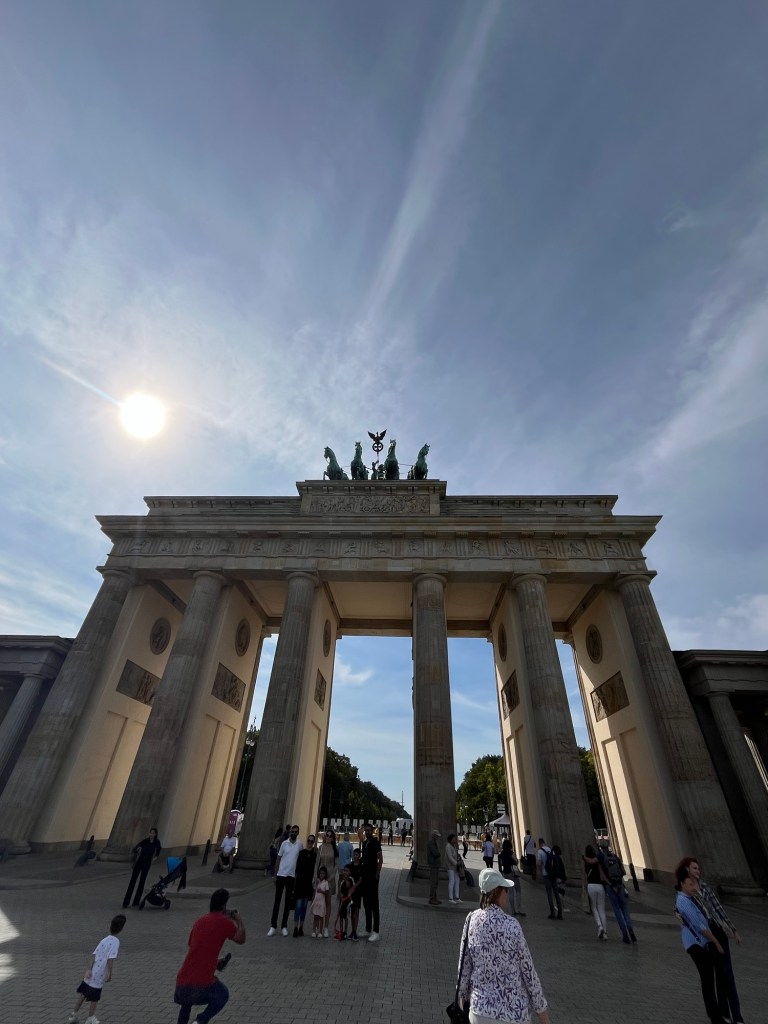
I bought hop on hop off bus tickets for us all – D and I have found this to be the very best way to see as much of a new city, in a really logical way. It is comfortable and you get a running commentary and history as you’re going. We usually do one full loop and then decide the places that we are most interested to go back to and really explore. Our stops for the loop on day one here, were the Brandenburg Gate – a Curry wurst snack was also necessary here, and the Gedächtnis Kirche.

The Brandenburg Gate is one of the most recognisable symbols of not just Berlin, but also Germany. It was built in 1788 by order of Kaiser Frederick William II and marked the entrance gate to Berlin. It is topped with a bronze sculpture of the Quadriga. It is a beautiful and imposing monument … and a place that seems to be the home for all kinds of protests – we saw three different ones while we were there!

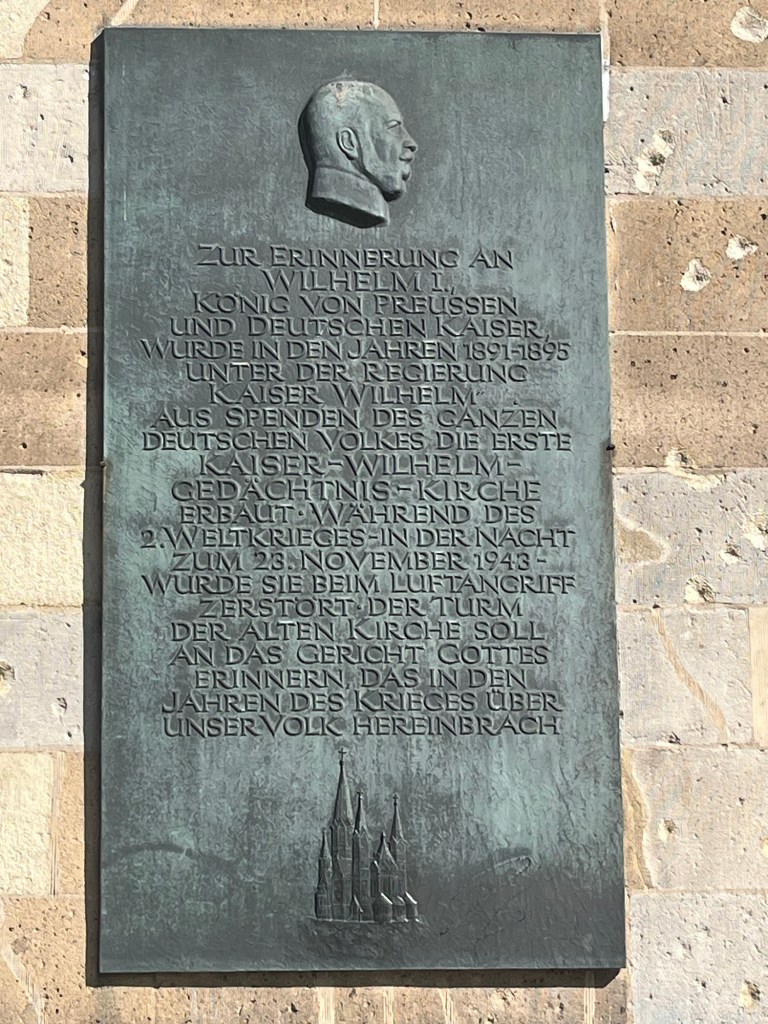
The Kaiser Wilhelm Memorial Church (also known as the Gedächtnis Kirche) stands right in the middle of Breitscheidplatz in the western center of Berlin. It is a much-visited landmark and is located quite centrally and very near to other attractions. Even from a distance, the ruined spire of the church is eye-catching. Although it was restored several times after its destruction during World War II, it was intentionally not completely rebuilt. Rather, its ruin serve as a memorial against war and destruction. There is a new church right next door where services are held, and it is also a very beautiful building.


Day two in Berlin was a full day of sightseeing for us. We had a bit of a plan of what we wanted to see, having done a full loop of the bus tour on day one (we did not quite manage everything!). Following a very nice continental hotel breakfast, off we went – and I need to say here, the weather has been spectacularly cooperative, with glorious blue skies and sunshine!
Our first stop, was on the second loop of the bus (there is a red line, which we did on day one and took about two hours on the west side, and a blue line which was 45 minutes and into eastern Berlin). The East side Gallery …. At 1316 metres long, the open-air art gallery on the banks of the Spree in Friedrichshain is the longest continuous section of the Berlin Wall still in existence. Immediately after the wall came down on 9 November 1989, 118 artists from 21 countries began painting the East Side Gallery, and it officially opened as an open air gallery on 28 September 1990. Just over a year later, it was given protected memorial status…. It is a huge wow from us!!!


Our next stop was at the Cathedral and Museum Insel (Museum Island) home for all of the museums and galleries. It also has several University buildings nearby. We would need at least another couple of weeks here to be able to visit them all, but they are amazing buildings to look at and walk past!
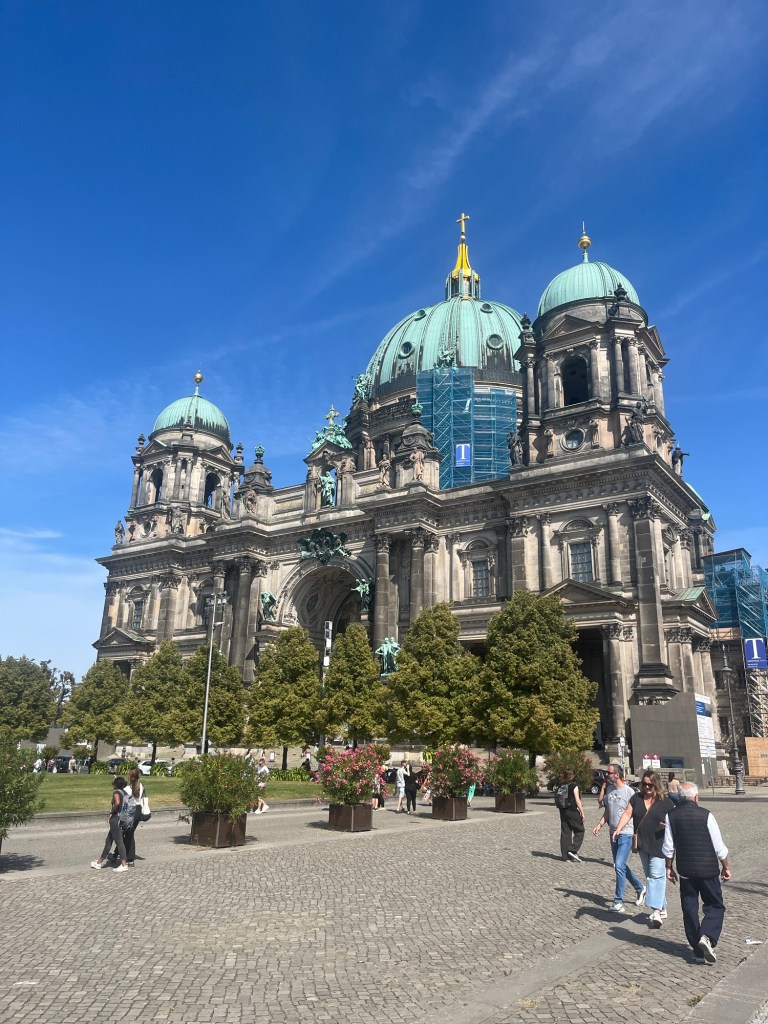

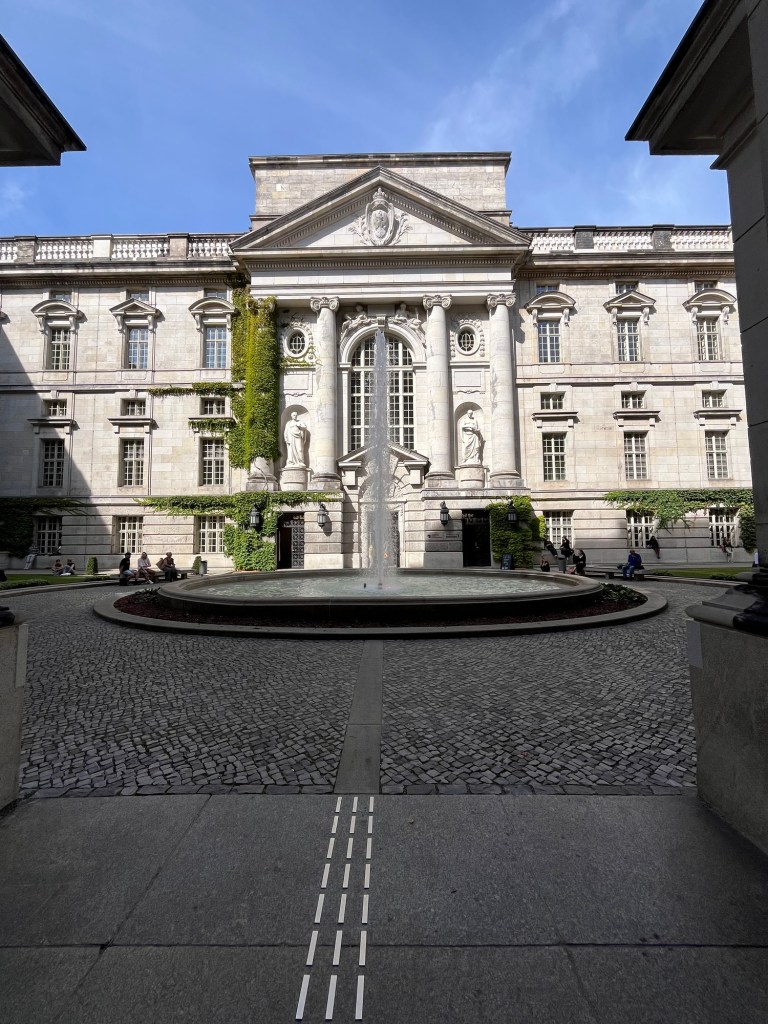
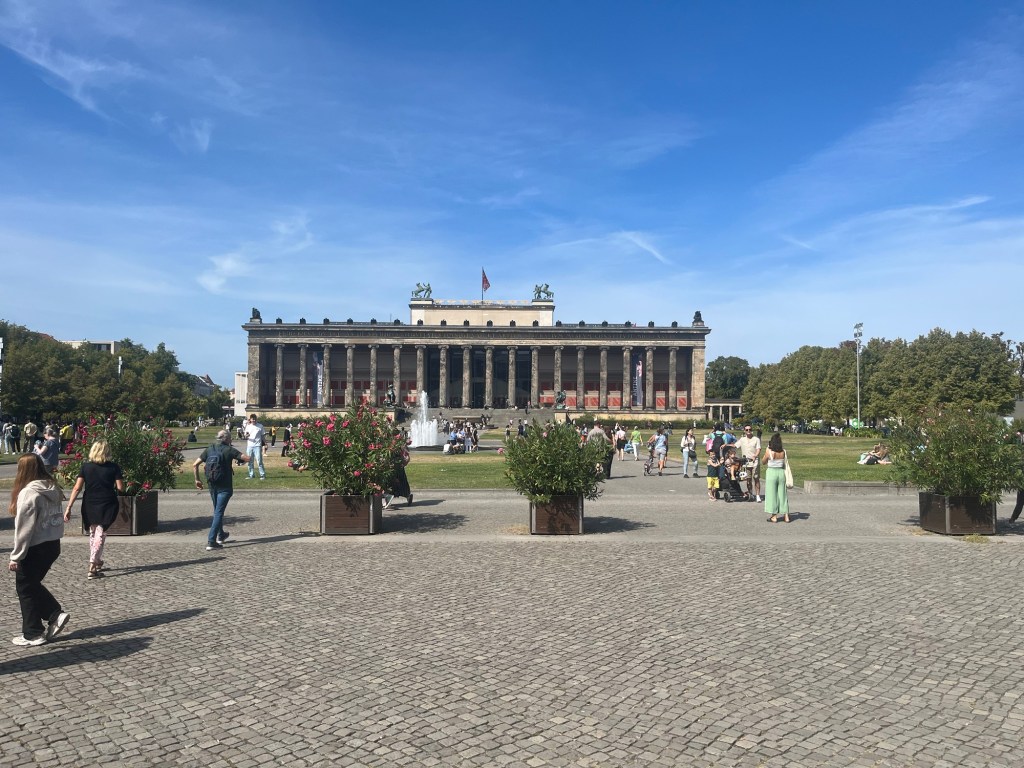
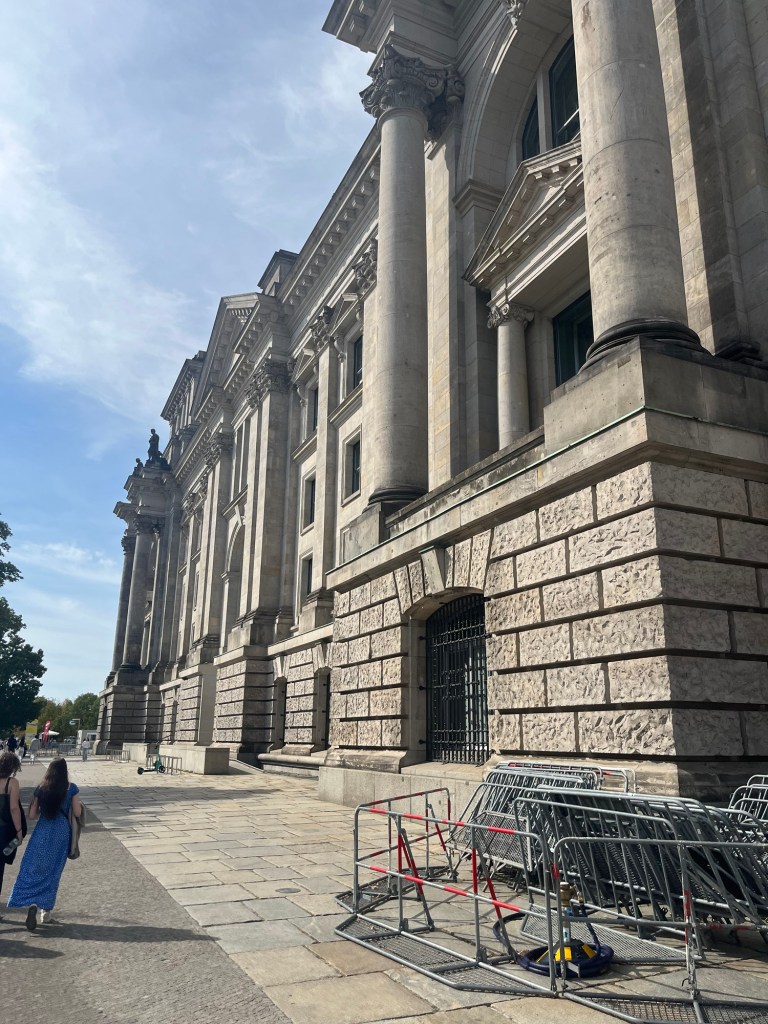
We passed the Brandenburg Gate again on our way to the Reichstag, home of the German Parliament. It is a huge and imposing building, that has a whole lot of bullet holes (remnants of the war) all over its facade. A lot of the buildings that survived the war time bombing seem to have shrapnel and bullet damage when you look more closely. (There is also quite a lot of construction/renovation work happening all over the place, so scaffolding seems to be part of most photos!)

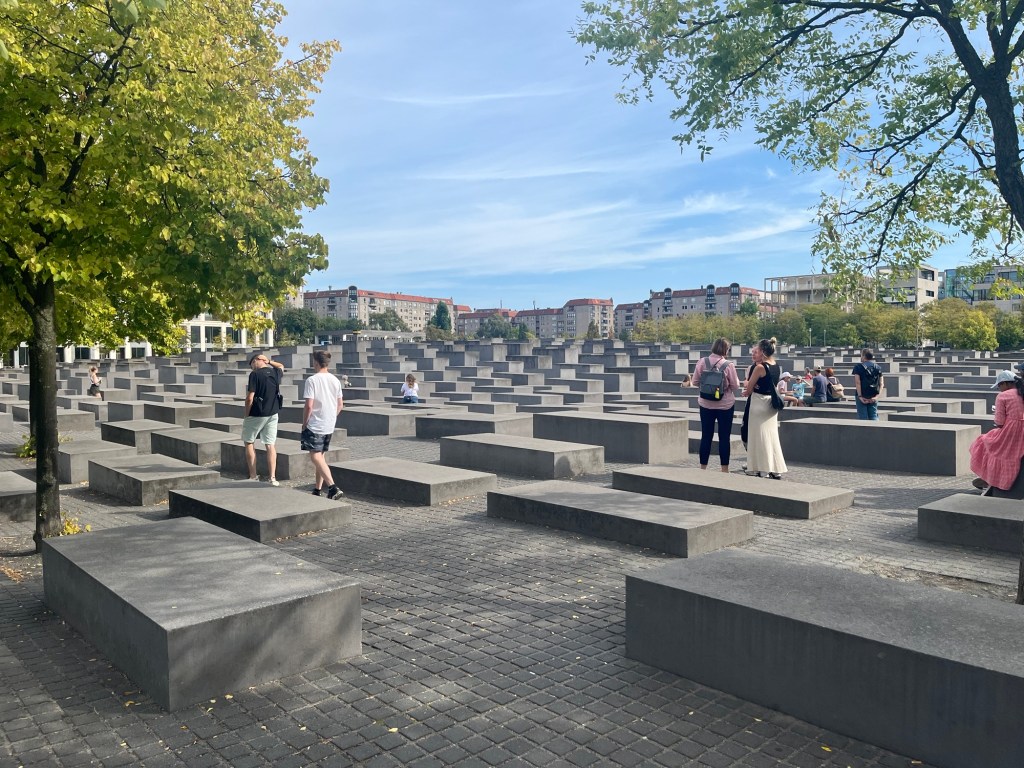
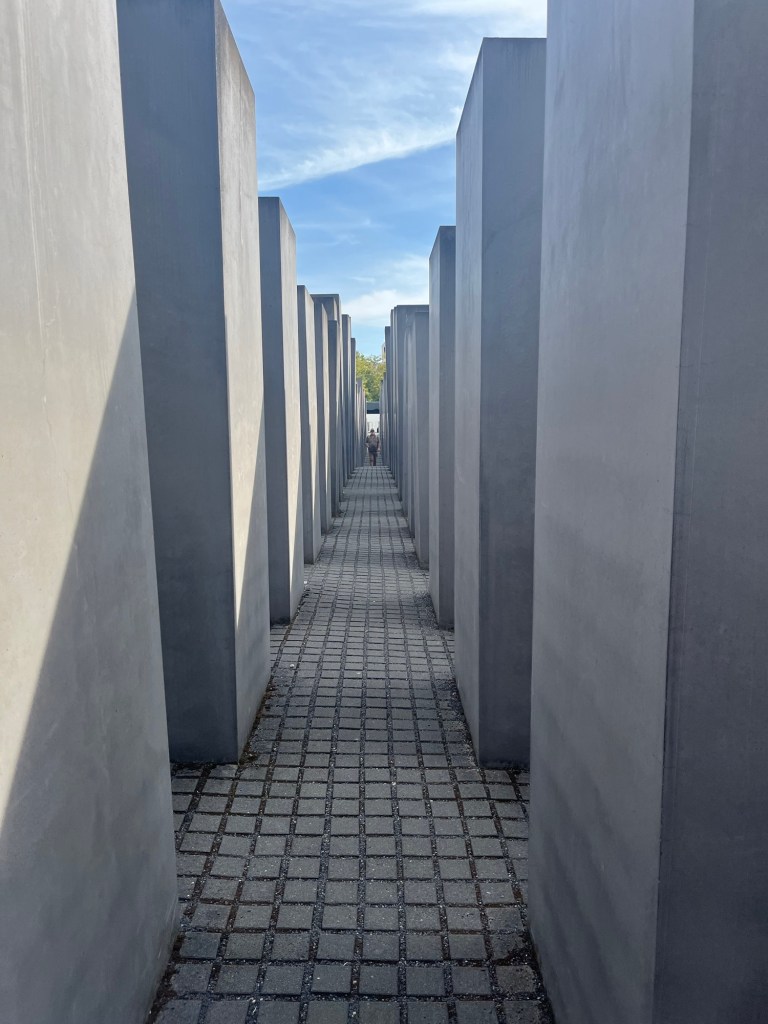
Our final stop for the day was at the Monument to the murdered Jews – a holocaust memorial. It consists of a 1.9-hectare (4.7-acre) site covered with 2,711 concrete slabs arranged in a grid pattern on a sloping field. The slabs are 2.38 m long, 0.95 m wide and vary in height from 0.2 to 4.7 metres. They are organized in rows, 54 of them going north–south, and 87 heading east–west at right angles but set slightly askew. An attached underground “Place of Information” holds the names of approximately 3 million Jewish Holocaust victims, obtained from the Israeli museum. It is an impressive, thought provoking and reflective, peaceful place to walk.
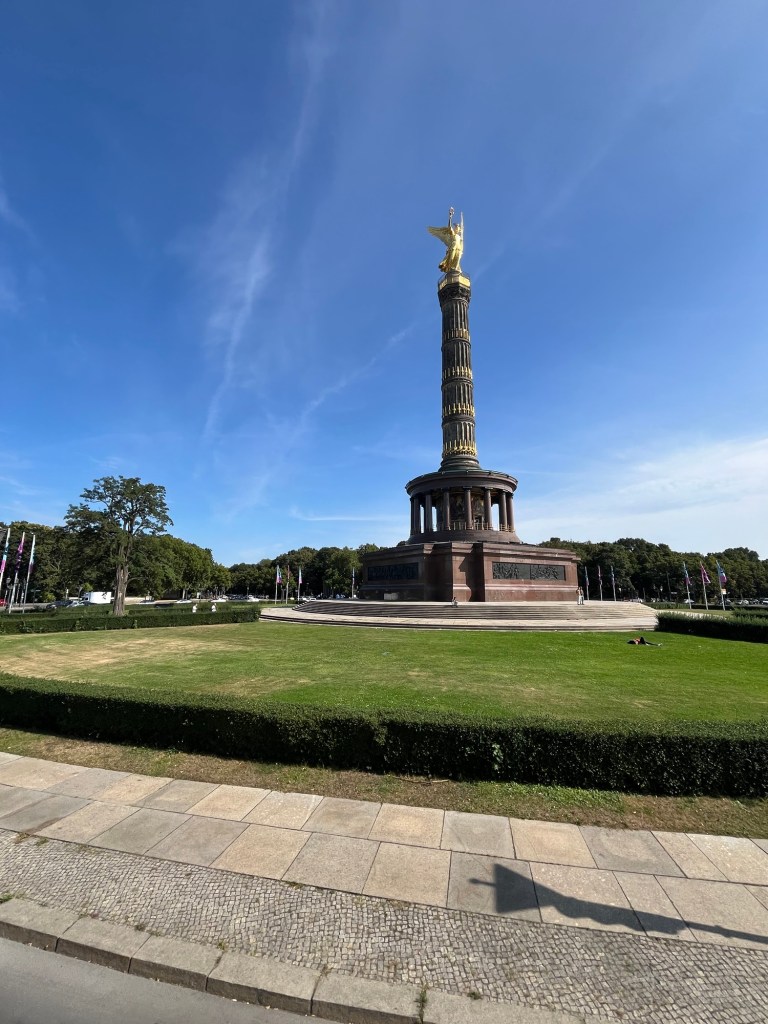
One last photo opportunity on the way back to our hotel was of the Siegessäule (The Victory Column).. a 67m tall monument to celebrate 4 Prussian victories in the war to unify Germany. It is a major tourist attraction in Berlin, and has a viewing platform at the top that we have been told offers spectacular views of the city. We did not have the time or the energy to climb the 285 step spiral staircase this time!
Our last day in Berlin saw us going to a place I have been wanting to see for ages… Checkpoint Charlie – the most well known border crossing between East and West Germany. There are several museums and galleries here, as well as a replica of the Guard station. The information in the museum is abundant and in some cases confronting…
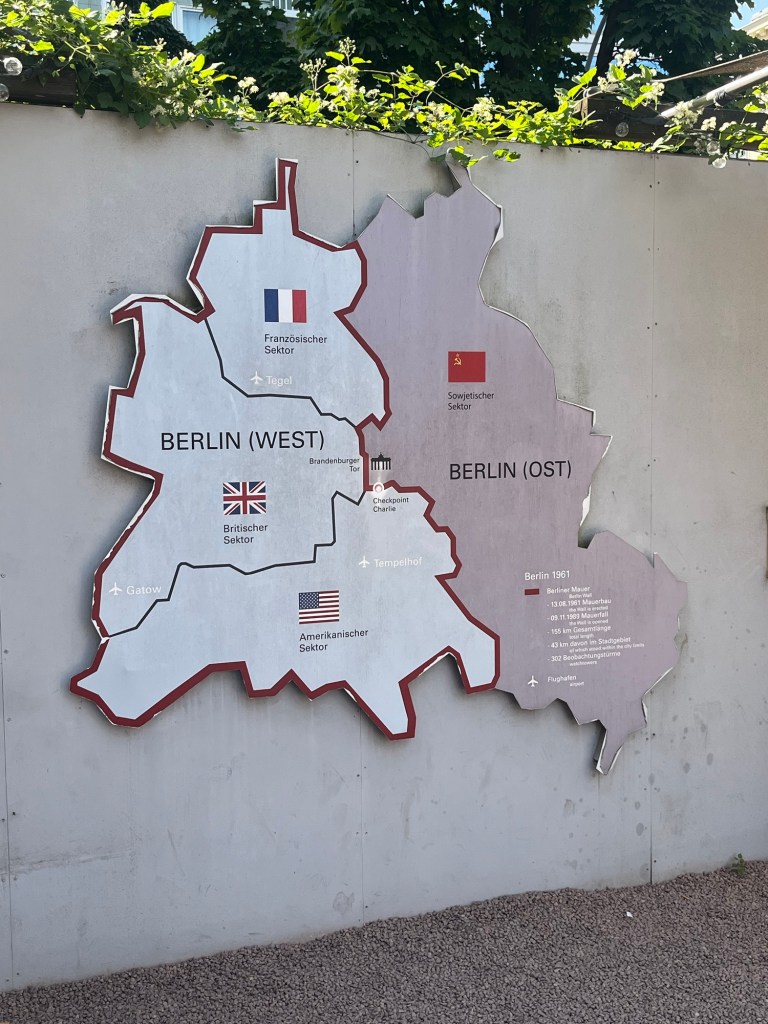
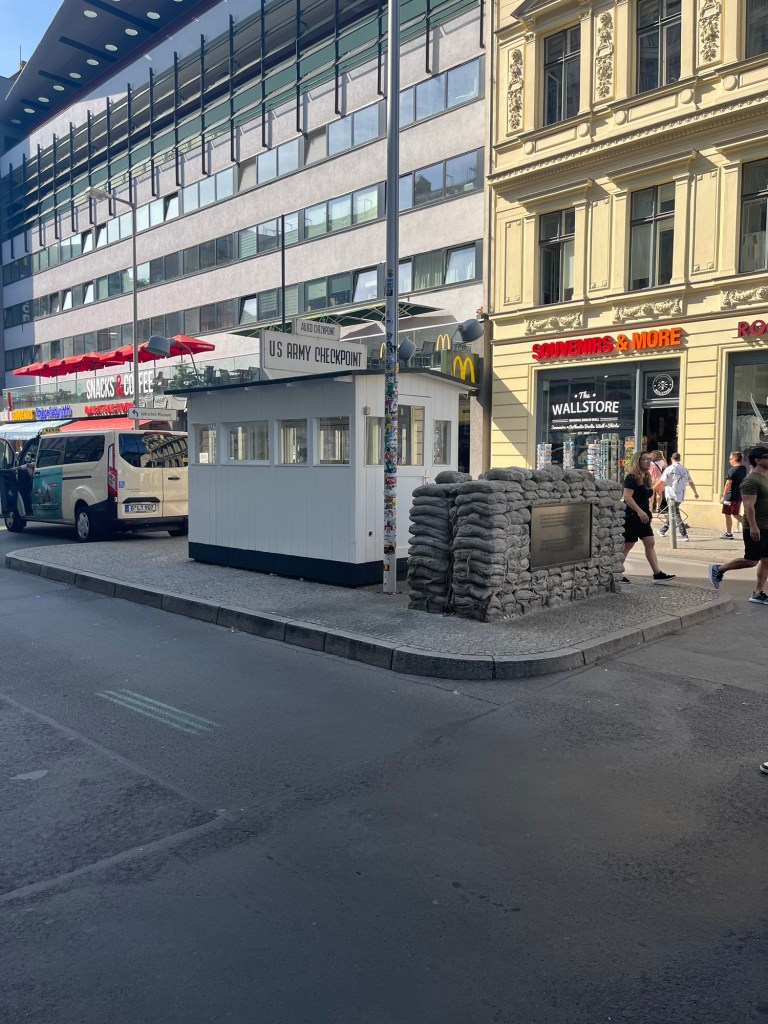

When Berlin was divided into East and West, the former military checkpoint was controlled by the Americans. Only foreigners, employees of the Permanent Mission of the Federal Republic of Germany in the GDR, and GDR officials were allowed to cross the border here. The border crossing gained notoriety in October 1961 after the construction of the Berlin Wall: in the last days of October, American and Soviet tanks took up positions here after members of the US mission were asked to identify themselves at the GDR border post when passing through the Allied checkpoint. Soviet and Allied tanks faced each other with live ammunition and a third world war almost ensued. In the years that followed, the checkpoint was the scene of spectacular escapes which often ended in death.


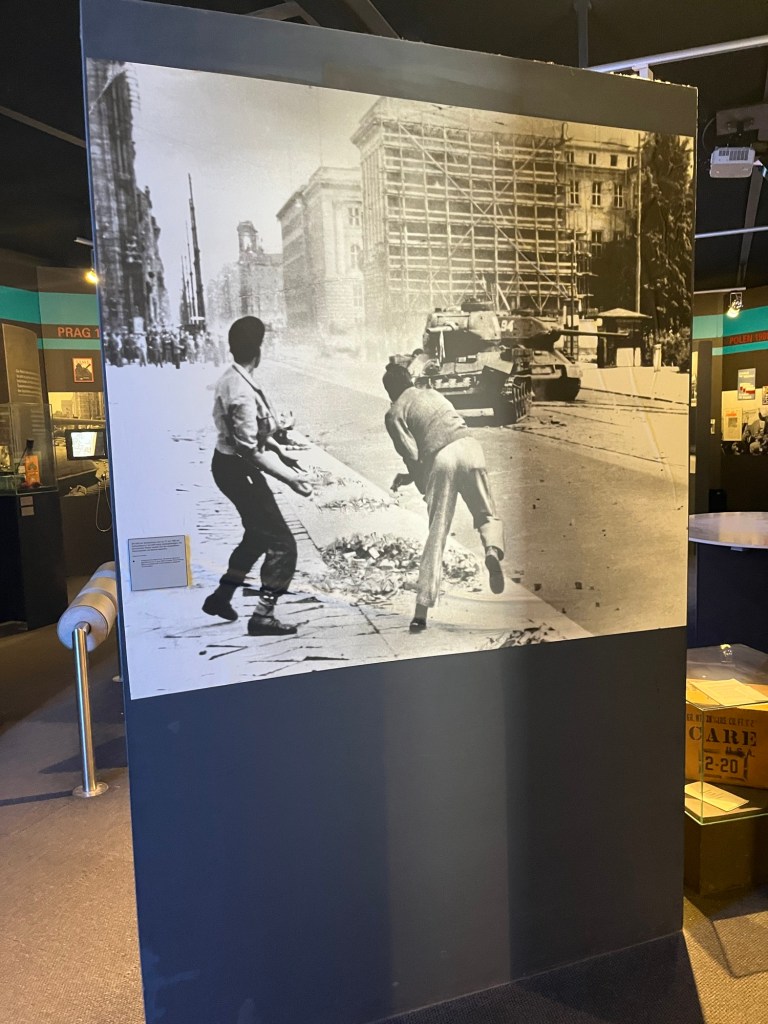
It is really hard to imagine what that time was like in Germany. The wall stood for 40 years before coming down in 1989, and families were separated for all that time. I’m so glad that we managed to get here before heading back to Hamburg for the last few days of our trip.
 Chapter Two - Dating disasters and other delights